

West Palm Beach Luxury Tower Project By David Allen Company Wins National Terrazzo Honor
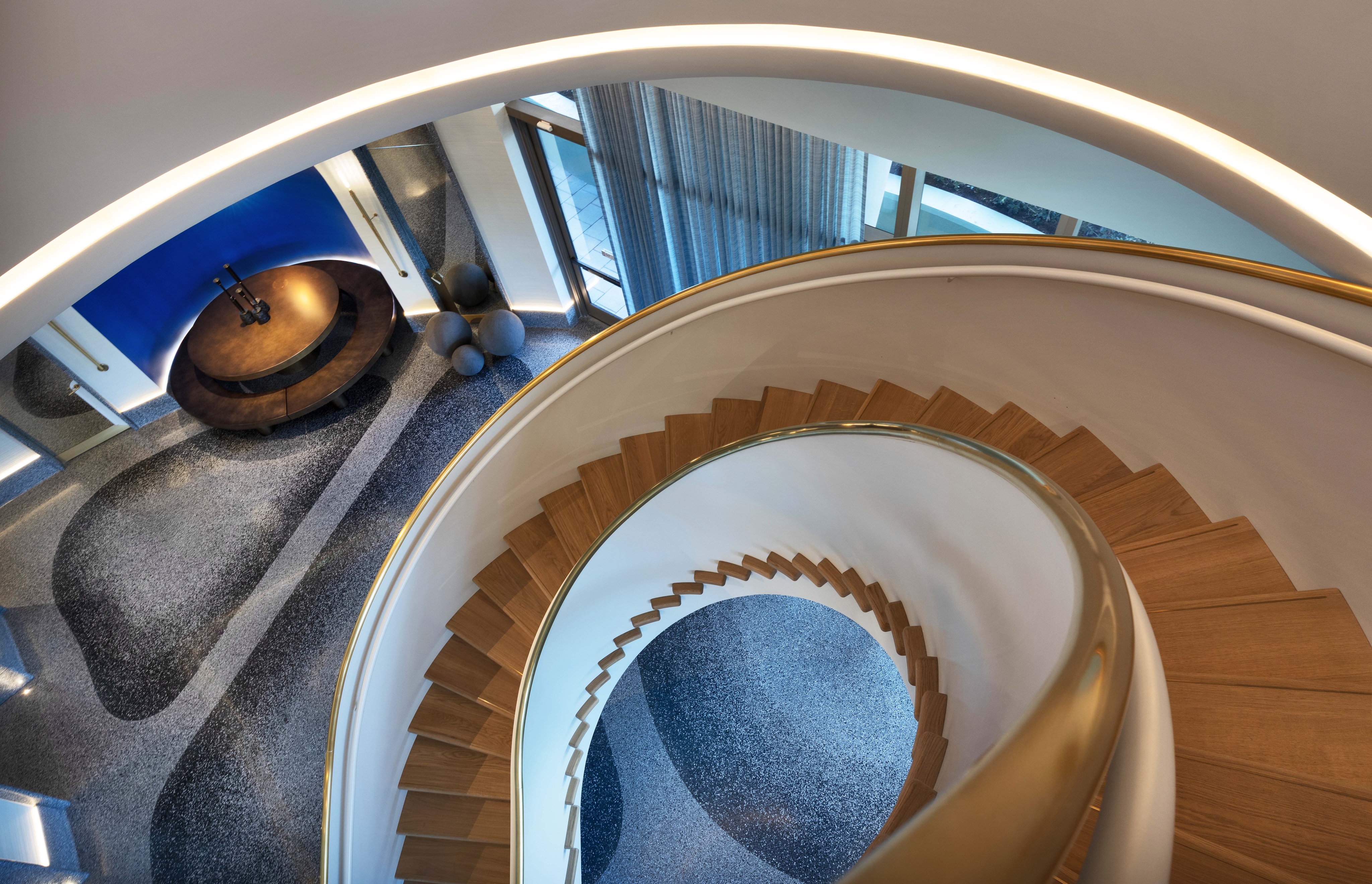
A hand‑blended terrazzo gradient floor anchors the lobby at Forte on Flagler, whose installation by David Allen Company earned a 2026 Honor Award from the National Terrazzo & Mosaic Association. © Miami in Focus, Inc. / Cheryl Stieffel
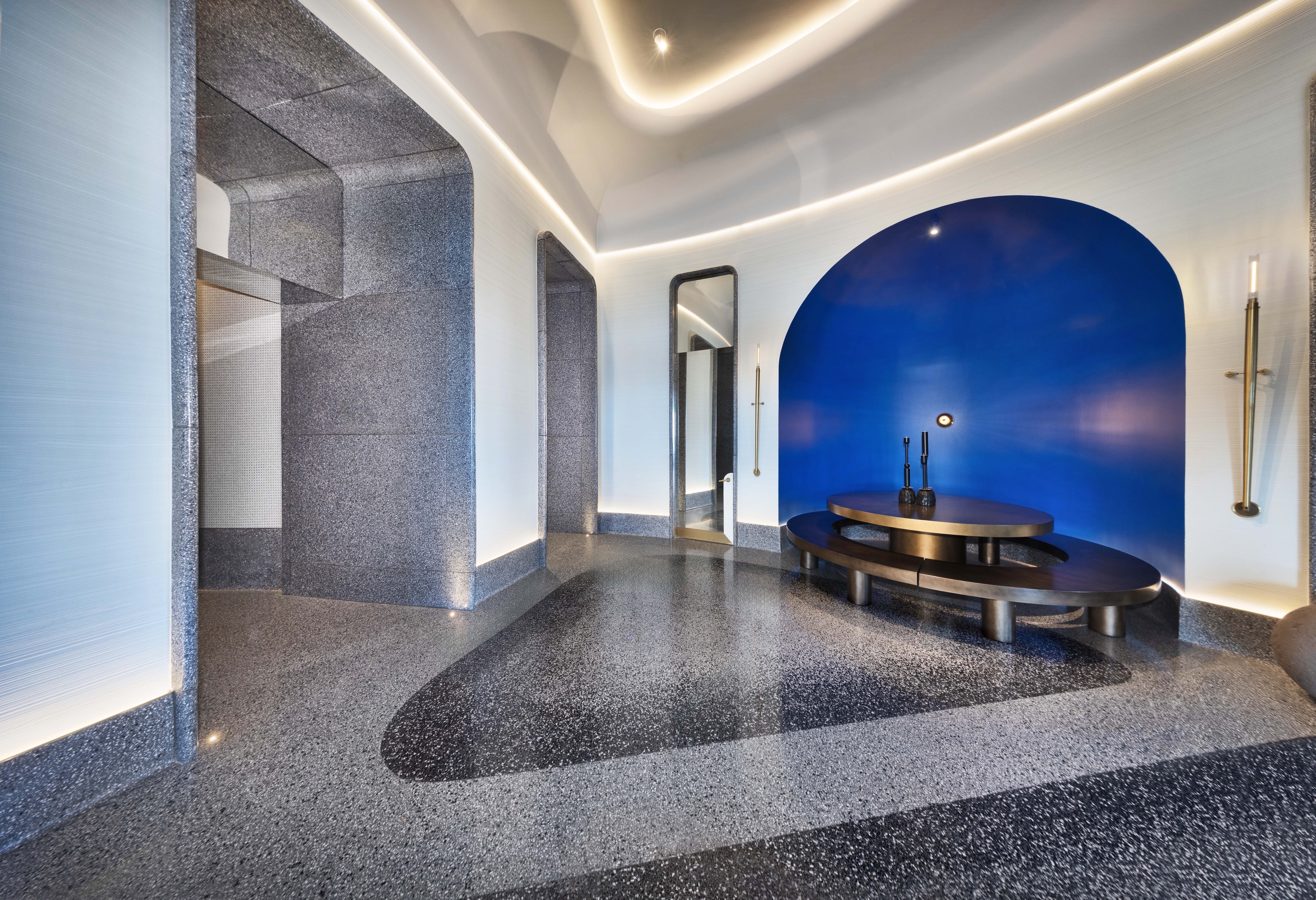
The organic gradient floor flows uninterrupted to custom terrazzo door surrounds, aligning precisely with portals and wall cladding in the luxury residential high-rise's public spaces.
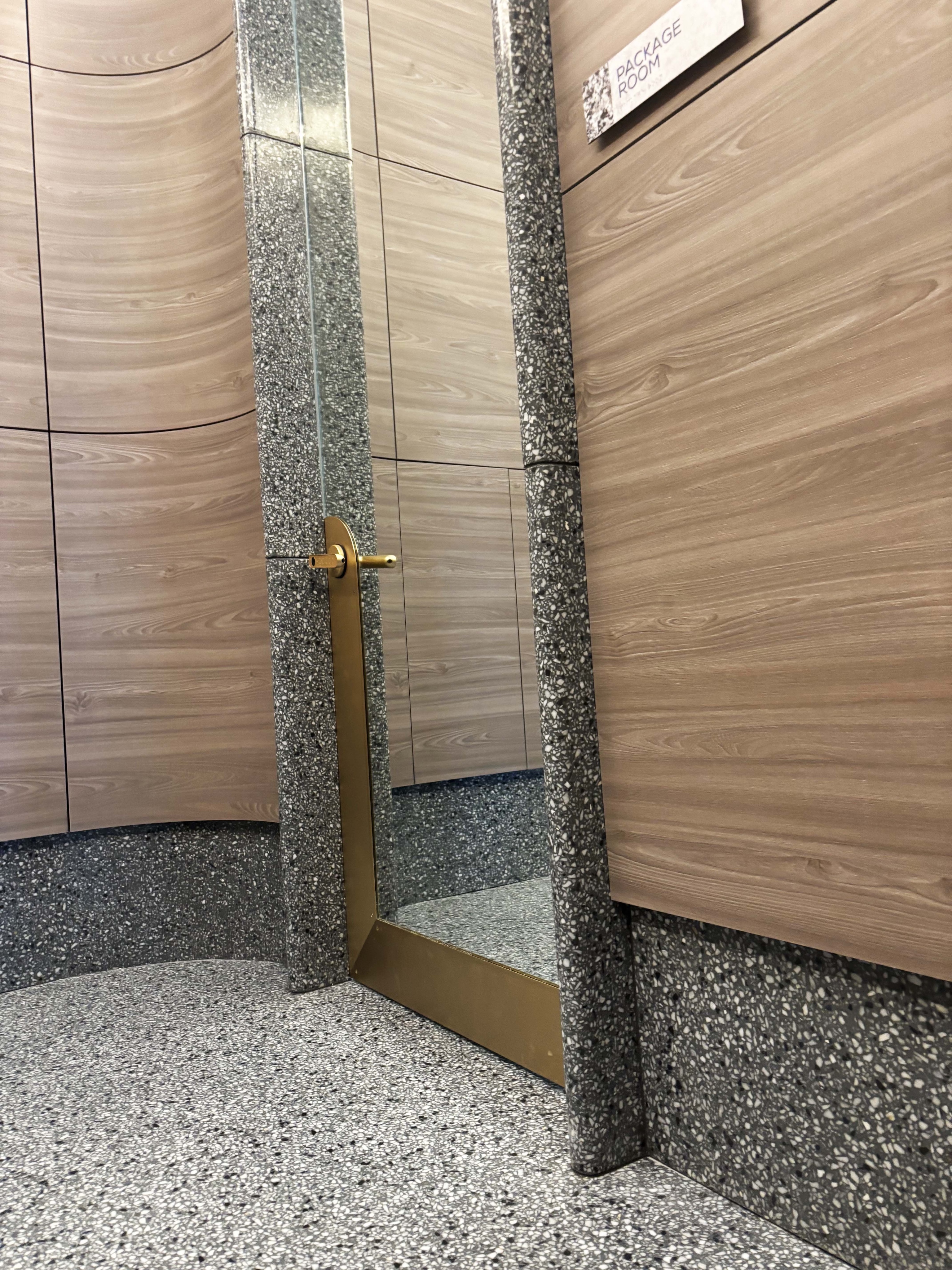
Terrazzo portals with concealed door frames and tight joints showcase the project’s exacting coordination across trades.
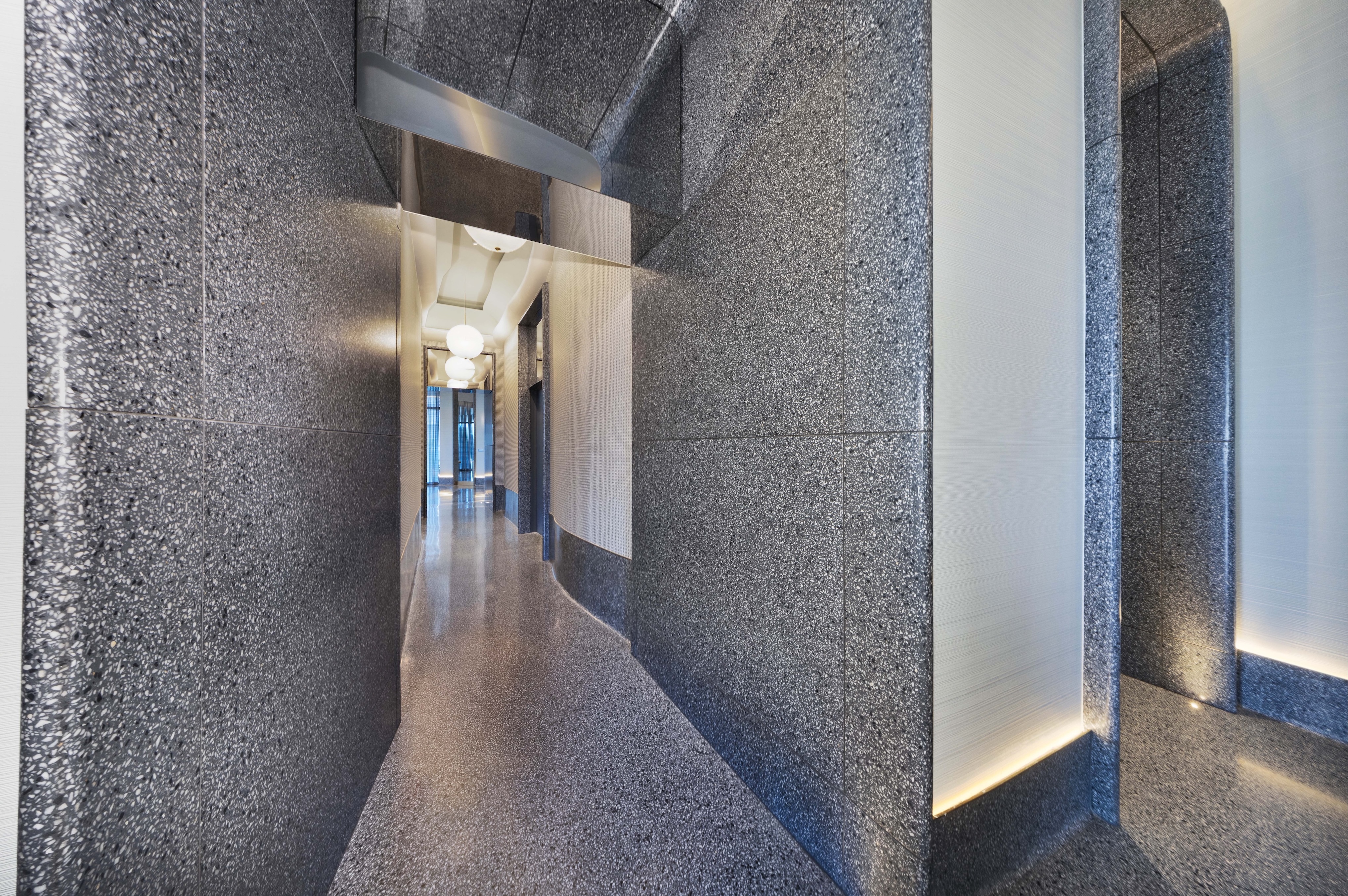
Matching terrazzo door surrounds, floor, and high cove base create a seamless architectural envelope at Forte on Flagler in West Palm Beach, Fla.

A hand-blended gradient floor, immersive terrazzo finishes, and an LED-integrated base transform a waterfront condominium into an architectural statement.
The project was designed by Arquitectonica with interiors by Jean-Louis Deniot (JLD) of Paris. The award was presented to the David Allen Company on May 13 at the NTMA's annual convention.
The Building and the Brief
Forte on Flagler is a 25-story tower completed in 2025, comprising 41 half- and full-floor residences designed to the standards of a private museum. With interiors conceived by a leading Parisian designer, every surface in the building's public spaces was expected to carry the weight of that ambition.
The terrazzo scope covered the main lobby, executive offices, mailroom, and connecting corridors; floor, wall, and ceiling transitions unified in a single material language.
The Problem No One Had Solved Yet
The project required an unusually high degree of pre-construction collaboration, according to the terrazzo contractor. David Allen Company spent six months working with project director Jonathan Wiser-Scherding of JLD to develop layouts, elevations, and technical drawings that could translate a refined European design vision into a constructible terrazzo scope.
The team completed multiple full revisions of shop drawings and precast detail sets. As samples were refined during development, David Allen Company produced five rounds of mockups, air-freighting them to Paris for approval each time.
The Gradient Floor
The installation centers on a hand-blended organic gradient floor in a single epoxy color that transitions through five custom marble blends. The gradient follows the ceiling soffit lines rather than a templated grid, and reverses across the floor. The design creates a quiet sense of movement and orientation that functions without signage or direction.
No divider strips were used in the field. Every color transition was feathered by trowel, wet-poured in stages, and hand-blended on-site. The gradient was poured in one continuous shot each day. Each floor joint was held to a maximum of one-eighth inch and aligned with the portals and wall cladding.
Beyond the Floor
The terrazzo did not stop at the ground plane. It extended vertically to the ceiling in three-quarter-inch architectural wall cladding, with radius door surrounds and portals featuring concealed door frames. Wall cladding included bullnosed edges with clean three-inch overhangs, precise returns, and integrated lighting, requiring exact coordination among terrazzo installers, millworkers, and door crews throughout.
Nearly 200 feet of 12.5-inch poured-in-place cove base was installed with a quarter-inch brass top cap housing integrated LED fixtures: a custom brass strip system that the terrazzo contractor developed on-site, which was not indicated in the original design documents.
Each solid cementitious precast column weighed 400 pounds. They were custom-fabricated, hand-placed, and aligned with precision in a lobby where every surface was expected to meet uncompromising standards.
"This was one of the most challenging but rewarding projects we've ever done, no doubt," said Jackson Smith, Senior Project Engineer at David Allen Company. "It pushed the limits of what terrazzo can do: floor, wall, structure, lighting, all in one installation."
What It Became
"The terrazzo doesn't merely dress the spaces," said Wiser-Scherding. "It becomes an essential component, unifying the architectural language with the decorative dimension of the project."
Wiser‑Scherding noted that the completed terrazzo at Forte on Flagler fulfills the design team’s ambitions for the project, both in spirit and execution: “The creation of the terrazzo was both an aesthetic and technical challenge; it required achieving a seamless dialogue between the architectural volumes, natural light, and surrounding textures, while maintaining a timeless sense of elegance.”
Donato Vinciguerra, Senior Project Manager at Two Roads Development, described the outcome as flawless, noting that the installation exceeded expectations across every dimension of complexity, from gradient development and mockup iterations to portal alignment and precast coordination.
About David Allen Company
David Allen Company has installed over 65 million square feet of terrazzo. Established in 1920 and an NTMA member since 1944, the company is recognized for its expertise in terrazzo craftsmanship across public and commercial spaces. Robert Roberson purchased the company in 1967, ten years after beginning his career there. His brother David serves as CEO, and David's son, Joshua, is the senior project manager and immediate past president of the NTMA board of directors.
About the National Terrazzo & Mosaic Association
The annual NTMA Honor Awards recognize outstanding terrazzo installations completed by association member contractors. Entries are evaluated on design achievement, craftsmanship, and technical execution by design professionals and terrazzo specialists. A full list of this year's 17 Honor Award recipients is available at ntma.com.
Founded in 1923, the NTMA is a nonprofit trade association of over 150 contractor and supplier members, headquartered in Fredericksburg, Texas. The organization establishes national standards for all terrazzo systems and applications, advancing quality craftsmanship and innovation while supporting its members in the trade.
The NTMA provides a broad range of free resources for architects, designers, artists, contractors, maintenance professionals, and property owners. From assisting design teams with specifications to offering technical guidance throughout a project, the NTMA helps ensure terrazzo installations meet the highest standards. NTMA Technical Director Gary French is available at gary@ntma.com. The association also offers AIA-registered continuing education programs for architects and design professionals. For more information about the NTMA Honor Awards and terrazzo resources for design professionals, visit ntma.com.
Terrazzo originated in 15th-century Italy, building on the mosaic traditions of ancient Rome. Venetian marble workers repurposed discarded stone chips into durable, decorative surfaces—a practice that made terrazzo an early sustainable material. Today, terrazzo is still poured by hand on-site, with options for precast panels and waterjet-cut details. Stone, recycled glass, or other aggregates—which may be locally sourced—are set in a cement or epoxy base, and the surface is then polished to reveal the aggregate's color and texture. Valued for its design versatility, ease of maintenance, durability, sustainability, and lifecycle value, terrazzo is built to last the life of a building.
Chad Rakow
National Terrazzo & Mosaic Association
+1 800-323-9736
info@ntma.com
Visit us on social media:
LinkedIn
Instagram
Facebook
YouTube
TikTok
National Terrazzo & Mosaic Association 2026 Honor Awards
Legal Disclaimer:
EIN Presswire provides this news content "as is" without warranty of any kind. We do not accept any responsibility or liability for the accuracy, content, images, videos, licenses, completeness, legality, or reliability of the information contained in this article. If you have any complaints or copyright issues related to this article, kindly contact the author above.
