

Any Hour Services Issues 'Beat the Heat' Pre-Summer Prep Initiative for Arizona Homeowners Regarding HVAC Maintenance
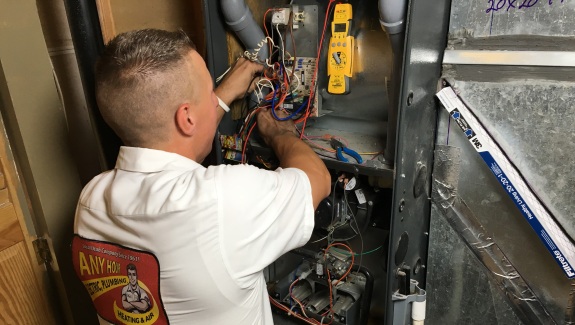
An Any Hour technician repairing a furnace.
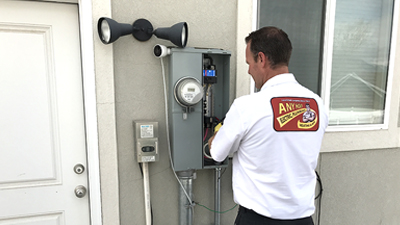
An Any Hour technician examining an electric panel.

Neatly organized electrical breaker panel with labeled circuits.

An Any Hour technician arriving with tools.

Any Hour Services Issues Seasonal Guidance for Arizona Homeowners Regarding Preventative HVAC Maintenance
PHOENIX, AZ, UNITED STATES, February 4, 2026 /EINPresswire.com/ -- Any Hour Services, a leading provider of residential electrical, plumbing, and HVAC solutions, has issued a formal recommendation for homeowners across the Arizona desert region to prioritize air conditioning inspections during the month of February. The guidance comes as regional climate data suggests a narrowing "warning period" before the seasonal transition to triple-digit temperatures. While current conditions remain mild, with average highs near 70°F, historical data confirms that 100-degree days are frequently only weeks away. By initiating inspections now, the organization aims to reduce the frequency of emergency system failures and mitigate the strain on the regional service supply chain that occurs when the desert heat arrives in earnest.The Strategic Importance of the February "Warning Period"
The Arizona climate presents one of the most demanding environments in the United States for mechanical cooling systems. According to meteorological records, the Phoenix metropolitan area regularly experiences temperatures exceeding 100°F for more than 100 days per year. For an HVAC unit, this operational load is the mechanical equivalent of driving a vehicle thousands of miles at high speeds without pause. Consequently, the reliability of these systems is a matter of both economic concern and residential safety.
The decision to advocate for February inspections is rooted in the mechanical principle of baseline performance. During the winter months, HVAC systems are generally under lower stress, allowing technicians to observe the equipment in a stable state. This timing provides a critical opportunity to identify latent defects, such as micro-leaks in refrigerant lines, hairline fractures in fan blades, or degrading electrical capacitors, that may not trigger a system failure until the equipment is forced to operate at maximum capacity during a heatwave.
"A small tune-up in February prevents a total system failure in June," stated a spokesperson for Any Hour Services. "We want to ensure no Phoenix family is left without cooling when the desert heat truly hits."
Operational Efficiency and Economic Impact
The relationship between preventative maintenance and energy consumption is well-documented in the field of mechanical engineering. An air conditioning system relies on the efficient transfer of heat through evaporator and condenser coils. In the desert environment, the accumulation of caliche dust and airborne particulates acts as an unintended thermal insulator. This accumulation forces the compressor to run for longer durations and at higher internal pressures to achieve the desired indoor temperature.
Any Hour Services notes that a neglected system can experience a measurable decline in energy efficiency over a single season. The resulting increase in kilowatt-hour consumption manifests as higher monthly utility expenditures. To encourage proactive maintenance, Any Hour Services is promoting a $29 AC Tune-Up special. This initiative is designed to make professional diagnostics accessible to the broader community, allowing homeowners to reset the operational clock of their equipment for a nominal cost before the high-demand season begins.
Industry data indicates that a significant percentage of summer "no-cool" calls are the direct result of preventable mechanical degradation. Systems serviced during this off-peak window exhibit higher reliability ratings throughout the summer peak compared to systems that do not receive annual diagnostics.
The Risk of the "First Heatwave" Rush
The logistics of the HVAC industry are heavily influenced by weather patterns. In Arizona, the demand for residential service typically sees a 300% to 500% increase between the months of February and June. This surge creates a service bottleneck where the number of available certified technicians is outpaced by the volume of emergency repair requests.
By encouraging inspections in February, Any Hour Services is attempting to flatten this demand curve. For the homeowner, this translates to greater flexibility in scheduling and a more thorough inspection process. During the peak of summer, repair wait times across the region skyrocket, often leaving residents without cooling for days during dangerous temperature spikes. In contrast, a February visit allows for a comprehensive, holistic evaluation of the home’s entire mechanical health without the pressures of a backlog of emergency calls.
"Maintaining a stable service schedule is beneficial for both the provider and the consumer," the company noted. "When we can distribute the maintenance load across the winter months, we ensure that our personnel can dedicate the necessary time to each individual system, conducting deep cleanings and precision calibrations that are difficult to execute during the height of a mid-summer service surge."
Technical Scope of Seasonal Inspections
A standardized HVAC inspection during the February window encompasses several critical mechanical and electrical subsystems. The process begins with a verification of the refrigerant charge. Systems that are undercharged or overcharged do not cycle heat effectively and can cause liquid refrigerant to enter the compressor, leading to catastrophic failure.
Technicians also focus on the electrical integrity of the unit. Extreme heat from previous summers can cause wire insulation to become brittle and electrical connections to loosen due to thermal expansion and contraction. Capacitors, which provide the high-voltage "start" for the motor and compressor, are frequently identified as high-failure components. Testing these parts during a cool-weather inspection allows for replacement before they fail under the load of a summer start-up.
Airflow management is another primary focus. Technicians examine the blower assembly and the integrity of the ductwork. In many residential structures, duct leakage can account for a 20% to 30% loss of cooled air into unconditioned spaces such as attics. By identifying these leaks in February, repairs can be made in a climate that is safe for technicians to work in, as attic temperatures in the summer can reach dangerous levels, often exceeding 150°F.
Implications for Indoor Air Quality and Health
Beyond mechanical reliability, the seasonal inspection serves a secondary purpose related to public health: the maintenance of indoor air quality (IAQ). HVAC systems are the primary filtration mechanism for residential environments. During the winter period of inactivity, dust, allergens, and microbial growth can settle within the dark, damp environments of the evaporator coil and drain pan.
When the system is reactivated in the spring, these particulates can be distributed throughout the home. A professional inspection includes the sanitization of these components and the evaluation of the filtration system. For residents with respiratory sensitivities or allergies, this pre-season cleaning is a critical step in managing the indoor environment. The removal of biological growth also prevents the "clogged condensate line" issues that frequently lead to water damage in Arizona homes when the cooling season begins.
Historical Context and Industry Standards
The push for February inspections aligns with broader industry standards set by organizations such as the Air Conditioning Contractors of America (ACCA). These bodies have long advocated for biannual maintenance as a prerequisite for system longevity.
Historically, the Arizona market has seen a shift in residential construction toward high-efficiency, multi-stage systems. While these modern units offer superior comfort, they are also significantly more complex than the single-stage units of two decades ago. These advanced systems rely on sensors and electronic control boards that require precise voltage and clean environments to function correctly. The increased complexity of modern HVAC technology has made the annual checkup a necessity.
Summary of Recommended Actions for Residents
Homeowners are advised to review their service records to determine the date of their last professional HVAC evaluation. If a system has not been serviced within the last twelve months, the current February window is the recommended time for action. Any Hour Services emphasizes that this guidance applies to all residential units, regardless of age, as even newer systems remain under manufacturer warranty requirements that often mandate documented annual professional maintenance.
The organization remains committed to providing transparent, data-driven information to the public to ensure that residential infrastructure remains resilient. By utilizing the current $29 AC Tune-Up special, residents can mitigate the risks associated with the desert’s extreme climate and ensure a stable, efficient, and healthy indoor environment for the duration of the 2026 summer season.
About Any Hour Services
Any Hour Services is a multi-trade residential service provider specializing in heating, air conditioning, plumbing, and electrical systems. The organization focuses on technical proficiency, comprehensive diagnostics, and upfront communication regarding residential infrastructure health. With a fleet of fully equipped service vehicles and a staff of certified, background-checked technicians, Any Hour Services provides 24/7 support to homeowners, prioritizing safety, efficiency, and long-term mechanical reliability. The company adheres to all industry-standard safety protocols and maintains rigorous training programs to stay current with evolving HVAC and building code requirements.
Keri Peloso
Any Hour Services
email us here
Visit us on social media:
LinkedIn
Instagram
Facebook
YouTube
X
Legal Disclaimer:
EIN Presswire provides this news content "as is" without warranty of any kind. We do not accept any responsibility or liability for the accuracy, content, images, videos, licenses, completeness, legality, or reliability of the information contained in this article. If you have any complaints or copyright issues related to this article, kindly contact the author above.
